







Back to Tour: Medicinal Plants Tour
|
Salvia officinalis Common Sage; Garden Sage; Kitchen Sage; Broadleaf Sage |
Denver Botanic Gardens
Gardens Navigator 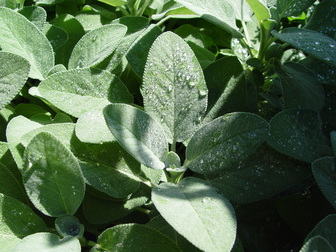
|
|
Accession Number: 680213*2 Map | |
| More about Salvia officinalis | |
 E-mail
| TOUR DETAILS |
Medicinal uses: Sage is an antispasmodic as well as an emmenagogue (promoting menstruation), easing menstrual pains. It has one of the highest anti-perspirant properties ever known in plants. Sage is also anti-bacterial. Compounds within the leaf have estrogenic properties which are key in relieving the night sweats with menopause. Sage has been proven to slow the progress of dementia and Alzheimer’s disease as it has acetylcholinesterase, an enzyme that is targeted by Alzheimer’s drugs. Mythology/Folklore: Ancient Arab physicians believed that sage could incur immortality. Ancient Egyptians thought sage could increase fertility. Native Americans burned sage to purify their environments. In 1597, English herbalist John Gerard describes sage as being “good for the head and braine.” Sage has been known as a type of “cure-all,” with many health benefits. The French call sage the toute bonne which means, “all is well.” The name Salvia comes from the Latin “salvere” meaning “to be saved” or “to be healed.” A medieval saying echoes this idea: “why should a man die while sage grows in his garden?” Medicinal recipe: Fresh sage oil: fresh sage plant, freezer bag, glass jar, carrier oil, like olive oil, funnel, rubber mallet, strainer, colored glass container Place a cup of fresh sage into the freezer bag. After squeezing the air out, seal the bag and pound the bag using a rubber mallet. Place the crushed sage into a glass container and add half a cup of carrier oil. Seal it tightly and place the jar where it can stay warm (where sun can touch it). Leave it alone for 48 hours. Strain the oil from the mixture and transfer the oil back to the jar. It can stay fresh for a year if placed in a cabinet, or longer if stored in the refrigerator. Culture: (from staff horticulturalist Blake Burger) “ Sage seems most content in a sunny location with its roots planted in well-drained soil. If you notice mold forming on stems and leaves, thin out dense growth to encourage air circulation, and avoid watering the leaves. Prune back each spring." |
| LOCATION GROUP | Herb Garden |
| FAMILY NAME | Mint Family |
| FAMILY | Lamiaceae |
| ACCESSION DATE |
March 15, 1968 (When this plant was acquired and registered in the database) |
| FLOWER COLOR | blue |
| FLOWER COLOR NOTE | lavender |
| USDA HZ | 5 (Coldest Zone Where Hardy) |
| HABIT | Herbaceous (Non-woody); Sub-Shrub |
Location Map for 680213*2 Salvia officinalis
Map Help
© Denver Botanic Gardens, 1007 York Street, Denver, CO 80206
Photography © Denver Botanic Gardens
Powered by