







Back to Tour: Medicinal Plants Tour
|
Mentha × piperita Peppermint |
Denver Botanic Gardens
Gardens Navigator 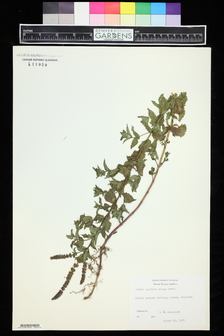
|
|
Accession Number: 162211*1 Map | |
| More about Mentha × piperita | |
 E-mail
| TOUR DETAILS |
Medicinal uses: Peppermint has multiple medicinal uses as it contains, menthol, a volatile oil that has antibacterial, antiseptic, and antifungal properties. For these reasons, many hikers chew peppermint while drinking from a stream to kill any microbes in the water. Peppermint is considered a choleretic (secretes bile from the liver), antiseptic, analgesic, and invigorator (brings up energy levels). It has also been known to have aphrodisiac (increases libido) properties in high doses. Peppermint is commonly used digestively to relieve symptoms of gas, bloating, indigestion and IBS. It can also be applied to the skin to relieve pain. Peppermint oil is especially useful in relieving headaches; but can also be used as a chest-rub to reduce coughing. Tea made from peppermint leaves is soothing to anyone with a sore throat, cough, bronchitis or cold. Mythology/Folklore: Peppermint is not actually its own species, but a hybrid of watermint (M. aquatica) and spearmint (M. spicata). The genus name Mentha comes from a Greek myth: Minthe was a beautiful nymph who Hades, god of the Underworld, was in love with. Unfortunately, his jealous wife Persephone found out, and turned Minthe into a plant! To make it up to Minthe, Hades gave her a sweet smell. Dried peppermint leaves were found in Egyptian pyramids dating from around 1,000 B.C. Peppermint was so valued during the time of Egyptian pharaohs, that they used it as a form of currency. Medicinal Recipe: Infused Peppermint Oil |
| LOCATION GROUP | Mordecai Children's Gdn; Mordecai Children's Gdn Medicinal Hill |
| FAMILY NAME | Mint Family |
| FAMILY | Lamiaceae |
| ACCESSION DATE |
June 20, 2016 (When this plant was acquired and registered in the database) |
| FLOWER COLOR | purple |
| FLOWER COLOR NOTE | lavender |
| USDA HZ | 3 (Coldest Zone Where Hardy) |
| HABIT | Herbaceous (Non-woody); Rhizome |
Location Map for 162211*1 Mentha × piperita
Map Help
© Denver Botanic Gardens, 1007 York Street, Denver, CO 80206
Photography © Denver Botanic Gardens
Powered by